Why Gamified Habit Trackers Actually Work (According to Behavioural Science)
Research shows gamification improves habit engagement by 25-30%. Here are the four behavioural science principles that make it work — and how to apply them to your own goals.

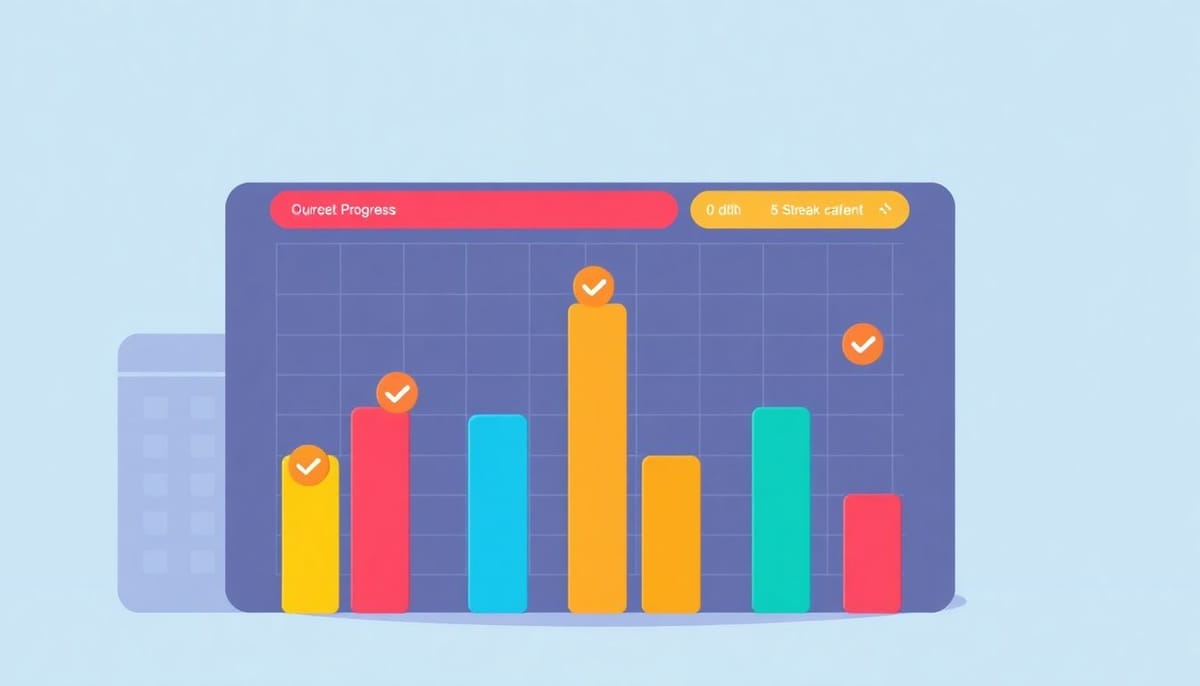
The Psychology Behind Points, Levels, and Progress Bars
Every January, millions of people set ambitious goals: lose weight, read more, learn a new skill. By February, most have quietly dropped them. The numbers are bleak. Research from the University of Scranton puts the success rate for New Year's resolutions at 8-12%. That's it.
But games tell a different story. People who play even simple mobile games routinely hit milestones, complete tasks, and come back day after day for months or years. Not because they have more willpower. Because the system is built to keep them going.
That gap between "I should do this" and "I actually want to do this" is exactly where gamified habit tracking lives. And a growing body of behavioural science explains why it works.
Want to put this into practice today? Get the Level Up Life Planner on Payhip for £18.59 → It's a fully customisable Google Sheets system built on these exact principles.
Why Traditional Habit Trackers Fail
Most habit trackers are digital checklists. Tick the box, move on. The problem: checklists give no emotional feedback. There's no sense of progression, no reward signal, and the only consequence for missing a day is a vague twinge of guilt.
Behavioural psychologist B.J. Fogg, author of Tiny Habits, argues that behaviour change depends on three elements converging at the same moment: motivation, ability, and a prompt. A plain checklist handles the prompt ("did you do it?") but does nothing for motivation. You're left running entirely on discipline, which is the most exhaustible resource humans have.
This is why apps with 30-day streaks see massive drop-off around days 14-21. Once the novelty fades and motivation dips, there's nothing structural holding the habit in place.
What Games Get Right: Four Principles from Behavioural Science
1. Variable Reward Schedules
In the 1950s, B.F. Skinner showed that pigeons pressed a lever more often when rewards came at unpredictable intervals rather than on a fixed schedule. This principle, variable ratio reinforcement, powers slot machines, social media feeds, and every compelling game loop.
Applied to habit tracking: an occasional unexpected bonus (an XP multiplier, a rare badge, a level-up at a surprising moment) keeps engagement higher than a predictable daily tick. The brain's dopamine system responds most strongly to anticipated reward, not guaranteed reward.
2. Visible Progress Architecture
The "endowed progress effect," demonstrated by researchers Nunes and Dreze in 2006, shows that people are significantly more likely to finish a task when they can see how far they've already come. In their study, customers given a loyalty card with two of ten stamps already filled completed the card at nearly twice the rate of those starting with a blank eight-stamp card, even though both required the same number of purchases.
Progress bars, XP totals, and level indicators tap directly into this bias. They turn abstract goals ("get healthier") into concrete, visible advancement ("you're 340 XP from Level 7").
3. Loss Aversion and Streak Mechanics
Kahneman and Tversky's prospect theory established that losses feel roughly twice as painful as equivalent gains feel good. Streaks use this well: once you've built a 15-day streak, the psychological cost of breaking it outweighs the effort of maintaining it.
But design matters here. Harsh streak penalties, where you lose everything on one miss, create anxiety and push people into permanent abandonment. Well-designed systems use "streak shields" or grace periods that keep the loss-aversion motivator without the catastrophic failure state. Tension, not trauma.
4. Identity Reinforcement Through Narrative
James Clear's Atomic Habits argues that durable behaviour change comes from adopting an identity, not just setting goals. "I'm someone who exercises" is more powerful than "I want to exercise three times a week."
Games understand this. When you level up a character, assign skill points, and watch your avatar change, you're not just logging behaviour. You're building a story about who you're becoming. A gamified habit tracker that frames daily actions as character development plugs into that identity-level motivation.
What the Research Actually Says
A 2019 meta-analysis published in Computers in Human Behavior reviewed 38 studies on gamification in health and wellness. The findings were clear: gamification elements improved engagement by an average of 25-30% over non-gamified alternatives, with the strongest effects from systems that combined progress mechanics with social elements.
A separate study from the University of Pennsylvania (Patel et al., 2016) tested gamified step tracking among 602 overweight adults over 24 weeks. Participants using a gamified system with levels and social support logged significantly more steps per day than those using a standard tracker or financial incentives alone.
The consistent finding across this literature: gamification works best when it's layered onto activities you already care about. It doesn't manufacture motivation from nothing. It amplifies and sustains motivation that already exists. If you already want to build better habits, a gamified system gives your brain the feedback loops it needs to follow through.
The Level Up Life Planner applies all four of these principles in one Google Sheets template. Grab it for £18.59 on Payhip →
The Spreadsheet Advantage
Most gamified habit trackers are apps: Habitica, SuperBetter, LifeRPG. They work, but they share a real limitation. You can't customise the underlying system. The habits, categories, scoring, and progression are locked behind someone else's design decisions.
A spreadsheet-based approach flips this. You control the formulas, the categories, the point values, and the level thresholds. You can weight habits that matter most to you, design your own reward milestones, and adjust the system as your priorities shift.
This matters because behavioural science is firm on one point: autonomy drives sustained engagement. Self-determination theory (Deci & Ryan, 2000) identifies autonomy, competence, and relatedness as the three pillars of intrinsic motivation. A customisable system satisfies the autonomy need in a way rigid apps simply can't. And if you want a starting point rather than a blank sheet, check out this habit tracker spreadsheet template for a simpler introduction before going full RPG mode.
Putting It Into Practice: The Level Up Method
Based on these principles, here's what an effective gamified habit tracking system looks like:
- Daily habits earn XP. Weighted by difficulty and personal priority. Drinking water might earn 5 XP; a 45-minute workout earns 25 XP. You set the values.
- XP accumulates into levels. With each level requiring progressively more points (just like in games, early levels come fast to hook you in).
- Categories track life areas separately. Health, career, relationships, learning. You can see at a glance where you're thriving and where you're coasting.
- Streak bonuses reward consistency. But with built-in forgiveness. Miss a day? You lose the multiplier, not the streak.
- Monthly and quarterly reviews. Let you adjust point values and add new habits as your life changes.
The result: your daily habits feel like progress rather than obligation. Instead of asking "did I tick all the boxes?" you're asking "how close am I to the next level?" That's a fundamentally different psychological framing, and it's why people stick with gamified systems long after the plain-checklist version would've been abandoned.
Try It: The Level Up Life Planner
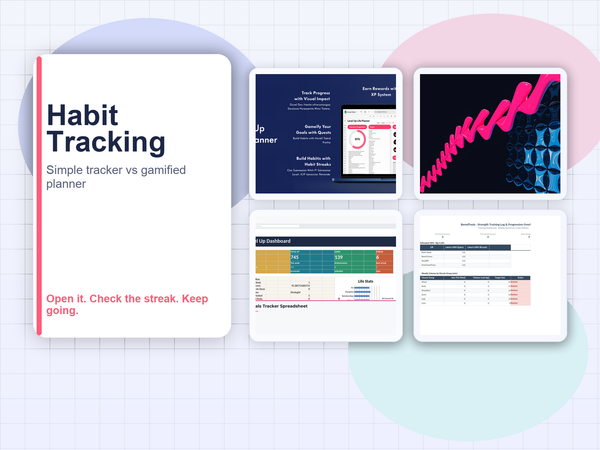
If you want to apply these principles without building a system from scratch, the Level Up Life Planner is a Google Sheets template that bakes in the behavioural science covered above. It includes XP-based habit scoring, automatic level progression, category tracking across six life areas, streak mechanics with grace periods, and monthly review dashboards. All in a spreadsheet you can fully customise.
It costs less than a month of most habit-tracking app subscriptions, and because it's a spreadsheet, you own it permanently. Every formula is yours to change.
Get the Level Up Life Planner on Payhip →
Tyler Casey builds practical spreadsheet tools at boredtools.store. The Level Up Life Planner is part of the BoredTools productivity collection.
Choose the right next step
The Level Up Life Planner is a gamified habit tracker spreadsheet for goals, habits, points and visible progress without adding another subscription.